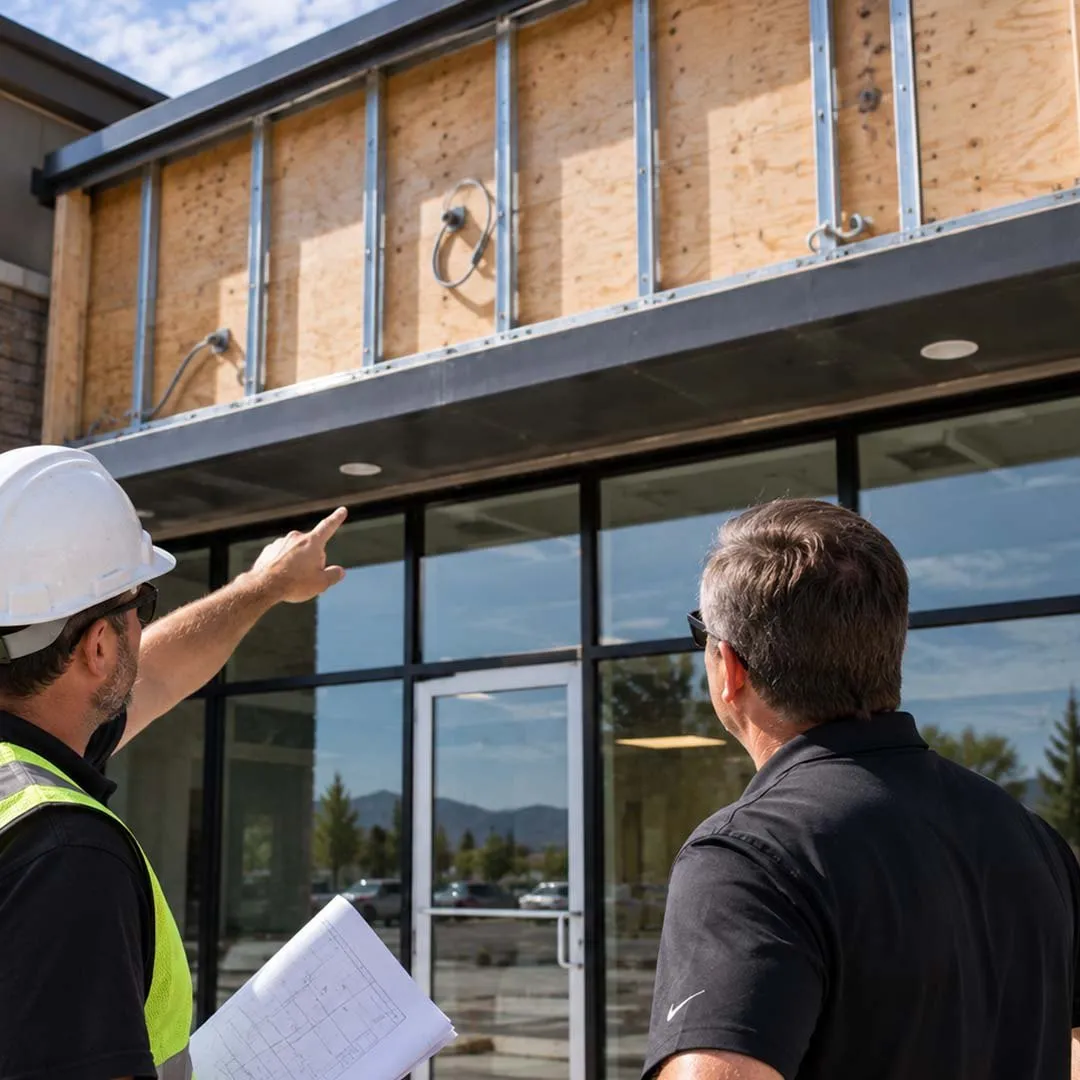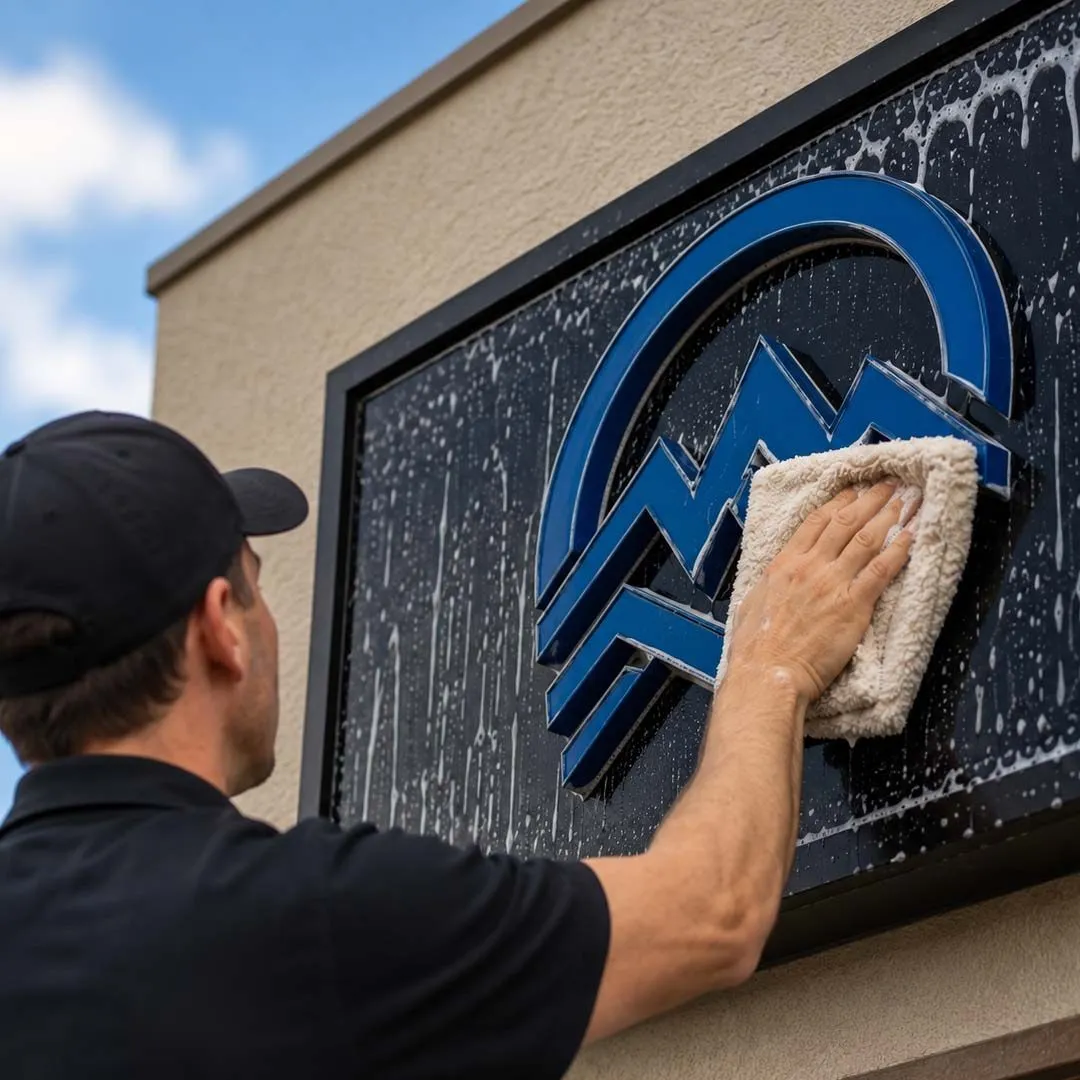
Renovating a commercial space or moving your business into a new location comes with a long list of decisions. Flooring, paint, lighting, electrical work, permits, furniture and construction schedules all compete for attention.
Signage often gets pushed toward the bottom of that list.
That’s a mistake that can lead to unnecessary costs, installation challenges and, in some cases, a beautifully finished storefront without a permanent sign when the doors open.
Planning your business signage early allows the sign company, contractor, electrician, landlord and business owner to coordinate important details before construction is complete. It also gives you time to consider visibility, placement, materials, lighting and how the finished sign will work with the building itself.
Whether you’re renovating an existing business or preparing a completely new location, signage should be part of the project from the beginning.
Why Signage Should Be Considered Early
A commercial sign isn’t simply something attached to the building after everything else is finished.
Depending on the type of sign you choose, installation may involve electrical connections, structural mounting, access behind exterior finishes, permits and coordination with other trades.
Waiting until the end of a renovation can create complications.
For example, electrical connections may need to be added after walls have been finished. A mounting location may not have adequate structural support. Exterior cladding may need to be altered. Or the location originally envisioned for the sign may not provide the visibility you expected.
Early planning allows these details to be incorporated into the project rather than worked around later.
If you’re unfamiliar with how a commercial sign goes from concept to completion, read Design to Install: What a Professional Sign Project Looks Like in Kelowna.
Start With Visibility, Not Just Appearance
A sign can look fantastic up close and still be ineffective from the road.
Before deciding exactly where a sign should go, consider how customers will actually approach the property.
Look at the building from:
- Both directions of vehicle traffic
- The parking lot entrance
- Nearby intersections
- Pedestrian routes
- Across the parking area
- Different angles around neighbouring buildings
Consider what might obstruct the view, including trees, landscaping, light standards, other signs and parked vehicles.
Viewing distance matters as well. Lettering that looks large on a design proof can appear surprisingly small when mounted high on a building and viewed from across a busy road.
Planning for real-world visibility helps determine the appropriate size, placement, contrast and sign style.
For more guidance on selecting signage for a commercial property, read How to Choose the Perfect Sign for Your Business in Kelowna.
Coordinate Signage With Your Building Design

Your signage should feel like it belongs on the building.
Materials, colours, architectural details and exterior finishes can all influence which type of sign works best.
A contemporary commercial building might suit dimensional lettering or illuminated channel letters, while another property may be better suited to a sign cabinet, fascia sign or another solution.
Planning early allows the sign design to complement architectural elements instead of competing with them.
This becomes especially important during a major renovation. If you’re already changing exterior colours, cladding, entrances or landscaping, it’s an ideal opportunity to consider how signage fits into the finished property.
Think About Electrical Requirements Before Walls Are Finished
If you’re considering illuminated signage, involve your sign company and electrician early.
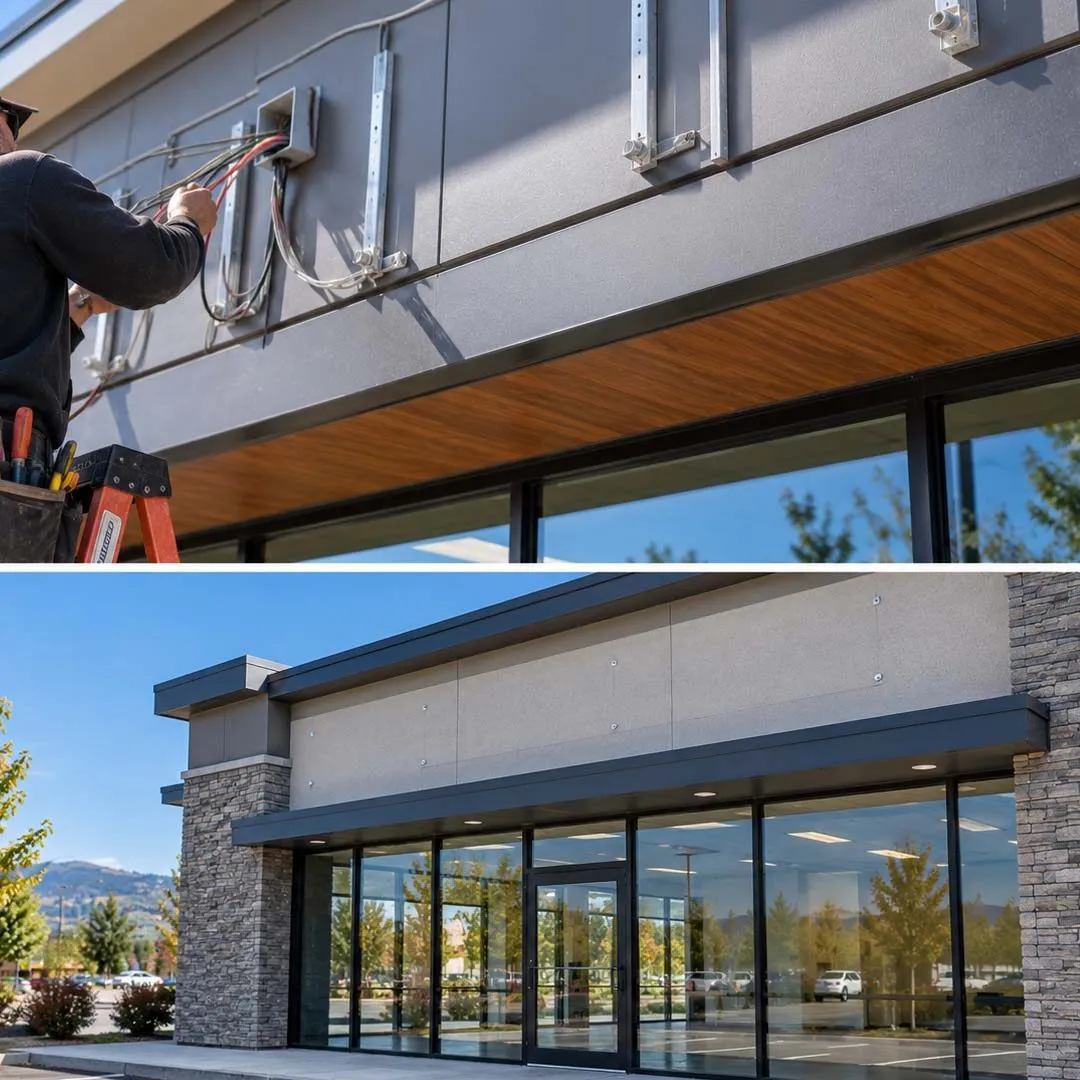
Channel letters, illuminated sign cabinets and other lighted signs require access to power. The location of those connections can affect both installation and the appearance of the finished project.
It’s much easier to provide the necessary electrical service while walls and ceilings are already open than after everything has been closed, painted and finished.
Early coordination can also help keep wiring and electrical components discreet rather than requiring visible workarounds later.
Understand Landlord Sign Criteria
If you’re leasing your commercial space, your landlord may have specific requirements for signage.
Commercial developments and multi-tenant properties often establish standards governing:
- Sign dimensions
- Placement
- Colours
- Illumination
- Mounting methods
- Materials
- Maximum projection
- Sign types
These requirements help maintain a consistent appearance throughout the property.
Before committing to a design, obtain the current sign criteria from your landlord or property manager and determine what approvals are required.
Multi-tenant properties can have additional considerations involving directories, monument signs and wayfinding. Learn more in How Signage Supports Property Managers, Developers, and Multi-Tenant Commercial Buildings.
Allow Time for Permits and Approvals
Signage may be subject to municipal regulations and permitting requirements depending on the location and type of installation.
This is another reason not to leave signage until opening week.
Approval timelines need to be incorporated into the overall project schedule, along with design, fabrication and installation.
Changes requested during the approval process can also affect timing.
Starting early provides breathing room and reduces the risk that your permanent sign won’t be ready when your business opens.
Make Sure Your Branding Is Final

A move or renovation often happens alongside a broader business refresh.
You may be updating your:
- Logo
- Colours
- Website
- Business cards
- Printed materials
- Vehicle graphics
- Interior décor
Finalize your primary branding before sending a permanent exterior sign into production.
Signs are designed to last for years. You don’t want to install an expensive new sign only to discover that the logo or colour palette changes six months later.
It’s also important that the colours, typography and visual style used on your new sign match the rest of your customer-facing materials.
For more on creating that consistency, read The Importance of Consistent Branding Across Signs and Print Materials in Kelowna.
Consider More Than the Main Building Sign
When businesses think about signage for a new location, the large exterior sign usually comes to mind first.
But consider the entire customer journey.
Depending on the property, you may also need:
- Parking signs
- Entrance identification
- Door graphics
- Window graphics
- Hours of operation
- Directional signs
- Reception signage
- Interior wayfinding
- Safety or regulatory signage
- Tenant directory updates
Thinking about these pieces together creates a more cohesive experience and reduces the chance of discovering missing signs after you’ve opened.
Vinyl can also be an effective way to extend your branding throughout windows, doors and interior spaces. See Vinyl Signs, Decals, and Graphics in Kelowna: How to Transform Your Business Space for additional ideas.
Don’t Automatically Reuse Your Old Sign
Moving doesn’t necessarily mean your existing signage has reached the end of its life.
In some cases, dimensional letters, sign cabinets or other components may be reusable. However, moving an existing sign isn’t always the most economical or effective choice.
A new building may have:
- Different mounting requirements
- A larger or smaller fascia
- Different electrical access
- New landlord restrictions
- Greater viewing distances
- Different architectural finishes
The cost of removing, modifying and reinstalling an older sign should be weighed against the benefits of creating something specifically designed for the new property.
Its age and condition matter too.
If you’re already investing in relocation, it may not make sense to reinstall signage that’s approaching the end of its useful life.
Read How Often Should Businesses Replace Their Signs? Warning Signs It’s Time for an Upgrade for signs that replacement may make more sense.
Use Temporary Signage Strategically
Sometimes permanent signage simply can’t be installed before opening day.
Construction delays, permit timing or building access can all affect installation schedules.
Temporary signage can help bridge the gap.
Depending on the property, options might include banners, window graphics or temporary identification signs.
The important thing is to anticipate the possibility rather than discover on opening morning that customers can’t identify your location.
Temporary signage should still look intentional and professional. It may be temporary, but it’s still representing your brand.
Think About How the Sign Will Be Maintained
Maintenance is much easier to consider before a sign is installed.
Ask practical questions such as:
- How will the sign be accessed for cleaning?
- Can electrical components be serviced?
- Will landscaping eventually block it?
- Is it exposed to irrigation?
- Are trees likely to grow into the sightline?
- How will snow, rain and sun affect the location?
Small decisions during the design and installation stages can make maintenance significantly easier later.
For ongoing care recommendations, read Exterior Sign Maintenance Tips That Extend the Life of Your Investment.
Don’t Sacrifice Quality to Meet an Opening Date
Opening deadlines create pressure.
When construction runs behind schedule, businesses sometimes try to compensate by rushing the remaining pieces.
Your permanent signage shouldn’t be one of them.
A commercial sign may represent your business for a decade or longer. Choosing an inferior material or compromising the design simply to save a few days can create much greater costs over the life of the sign.
If permanent signage won’t be ready, a well-produced temporary solution is usually preferable to rushing fabrication or installation.
Quality materials and workmanship remain important long after opening day. Read The Hidden Cost of Cheap Signage and Why Quality Pays for Itself for more on the long-term implications.
Bring Your Sign Company Into the Project Early

One of the simplest ways to avoid signage problems during a commercial renovation or relocation is to involve your sign company before the project is nearly complete.
Early involvement allows potential issues to be identified while they’re still easy to solve.
Your sign company can work with the information provided by your contractor, landlord, property manager or designer to help determine:
- Appropriate sign types
- Placement
- Visibility
- Approximate sizing
- Electrical requirements
- Mounting considerations
- Material options
- Permit requirements
- Installation access
That doesn’t mean the sign needs to be ordered on the first day of construction. It means signage becomes part of the project rather than an afterthought.
Make Signage Part of Your Renovation or Moving Checklist
A new or renovated location represents a significant investment in your business.
Your signage should support that investment.
Planning early gives you more options, reduces the likelihood of last-minute complications and helps ensure the finished sign works with the building, your branding and the way customers actually approach your property.
Signcraft works with Kelowna businesses, contractors, property managers and developers to design, manufacture and install commercial signage for new locations, renovations and existing properties.
If you’re preparing for a commercial renovation or business move, involving the Signcraft team early can help ensure your signage is ready to become part of the finished space rather than one more problem to solve before opening day.
Frequently Asked Questions
When should I start planning signage for a new business location?
Ideally, signage should be considered during the early stages of the renovation or tenant-improvement process. This provides time to address design, electrical requirements, landlord approval, permits, fabrication and installation.
Should my sign company work with my contractor?
It can be very helpful. Coordination between the sign company, contractor and electrician can ensure appropriate mounting surfaces and electrical connections are prepared before construction is completed.
Can I move my existing business sign to a new location?
Sometimes. Whether it’s practical depends on the sign’s age, condition, construction and whether it’s suitable for the new building. Removal, modification and reinstallation costs should be compared with the cost and benefits of a new sign.
Do I need landlord approval for a new business sign?
Many commercial landlords require approval before signage can be installed. Multi-tenant developments may also have specific sign criteria covering size, placement, illumination, materials and colours.
Will I need a permit for my new sign?
Permit requirements depend on the location and type of sign being installed. It’s important to investigate municipal requirements early enough that approvals don’t delay installation.
When should electrical work for an illuminated sign be completed?
Electrical requirements should ideally be coordinated during construction, particularly while walls and ceilings are accessible. This can make installation cleaner and reduce the need for modifications later.
What signs might I need besides my main storefront sign?
Depending on the property, you may need parking signs, directional signage, door and window graphics, hours of operation, reception signage, interior wayfinding and tenant directory identification.
What can I use if my permanent sign isn’t ready when we open?
Temporary banners, window graphics or other temporary identification signage may help customers locate your business until the permanent sign is installed.
Should signage be considered when choosing a new commercial location?
Yes. Visibility, available sign area, landlord restrictions, viewing distance and surrounding obstructions can significantly affect how prominently your business can be identified from the road or parking area.